Fleeing climate change — the real environmental disaster | DW Documentary


Channel: DW Documentary
Uploaded by DW Documentary on 20190501
Categories: Education
Tags: climate change, climate refugee, global warming, Sahel zone, environment, climate, environmental problems, environmental disasters, drought, flooding, Indonesia flood, climate migration, changing environment, emission, pollution, climate crisis, climate crisis documentary, climate documentary, climate documentary 2019, climate refugees, DW, DW Documentary, documentary
How many millions of people will be forced to leave their homes by 2050? This documentary looks at the so-called hotspots of climate change in the Sahel zone, Indonesia and the Russian Tundra. Lake Chad in the Sahel zone has already shrunk by 90 percent since the 1960s due to the increasing heat. About 40 million people will be fo

Based on the YouTube documentary "Fleeing climate change — the real environmental disaster | DW Documentary", here is a detailed breakdown and summary of its content.

Overview & Core Theme

The documentary examines how climate change is triggering a global displacement crisis. Beyond war and conflict, extreme weather events—such as sea-level rise, sinking ground, thawing permafrost, and severe droughts—are destroying livelihoods, driving millions (and potentially billions by 2050) to become climate refugees.

Key Regions & Case Studies

1. Indonesia: Rising Seas, Subsiding Land, and Agricultural Shifts [02:29]

Pontai Bahagia Village: Rising ocean levels and excessive rain are submerging
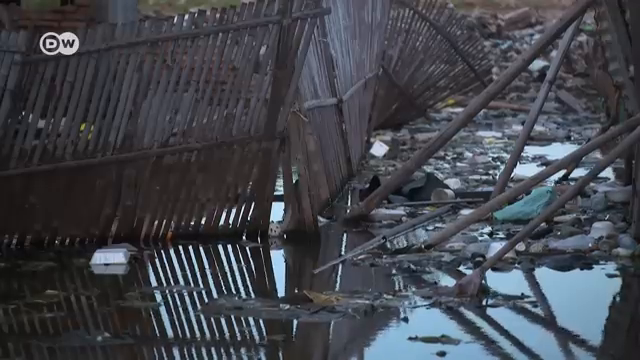
Image for chunk 1

local infrastructure. School classrooms regularly flood, forcing children to sit with legs submerged in water or abandon school entirely [03:31].

Jakarta (Urban Crisis):

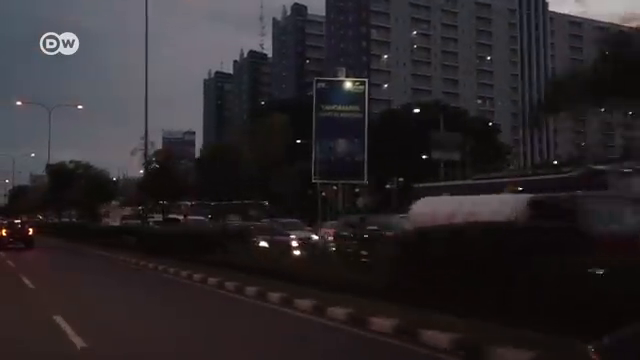
As the second-largest urban conglomeration in the world, Jakarta faces severe flooding due to rising sea levels (4–6 mm/year) combined with rapid land subsidence (3–20 cm/year) caused by groundwater extraction [08:05].

Slum areas (e.g., Dadup and along the Chiliwong River) are impacted most severely, as wealthier neighborhoods raise their ground, displacing floodwaters into poorer areas [09:25].

Government mitigation, such as building a massive sea wall, is slow and incomplete [08:52].

Cianjur District (Agriculture)

Image for chunk 2

: Farmers who traditionally relied on stable wet/dry seasons face a 60% drop in crop yields due to unpredictable rainfall, forcing many to abandon farming or migrate abroad [13:19].

Mudslides & Deforestation: Logging in mountainous regions diminishes natural rainwater storage, triggering deadly mudslides [14:10].

2. Russia (Siberia): Thawing Permafrost & The "Carbon Bomb" [15:42]

Kalema River & Chersky (Northeastern Siberia):

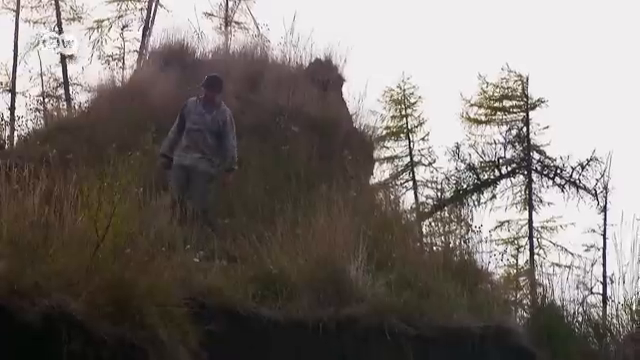
Nikita Zimov and researchers study permafrost thaw, which releases ancient organic matter (grass roots, mammoth remains) stored for 40,000 years [17:20].

The "Carbon Bomb": As permafrost degrades, microbes consume the organic matter, converting it into vast amou

Image for chunk 3

nts of methane and CO

2

. This threatens to transform the global biosphere from a carbon sink into a climate change accelerator [21:56].

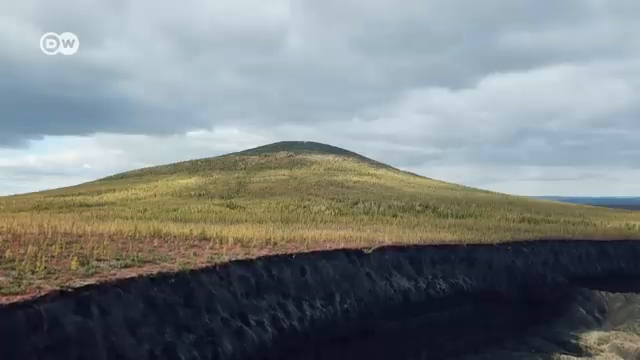
Batagaika Crater ("Gateway to the Underworld"): A massive thermokarst mega-crater (over 1 km wide and up to 100 m deep) expanding rapidly due to forest clearing and warming temperatures [24:08].

Infrastructure Collapse: Thawing soil causes ground collapse beneath buildings, roads, and pipelines, putting Siberian cities and energy transmission lines at severe risk [26:53].

3. Central Africa (Cameroon & Lake Chad Region): Severe Drought [27:49]

Northern Cameroon (Mayobula River & Wang):

Shrinking rainy seasons (reduced to under 4 months) fall below th

Image for chunk 4

e 120-day threshold needed for agriculture and livestock [34:12].

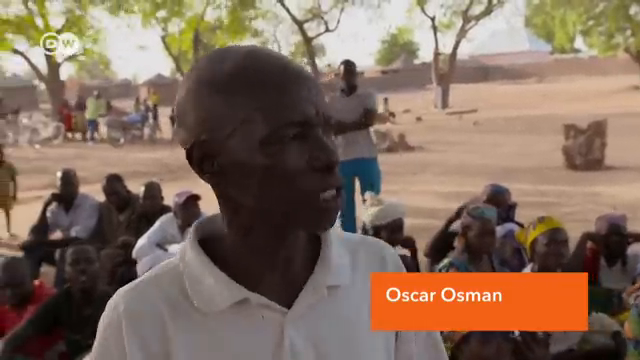
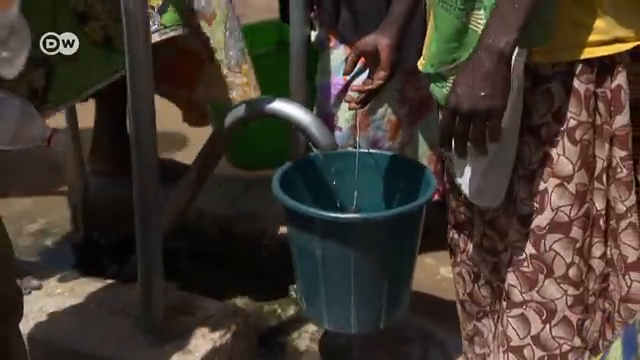
Villagers and herders must walk miles or dig deep into dry riverbeds for water. Lack of water forces young people to migrate to major southern cities [30:03].

Compounding issues: Displacement from Boko Haram terrorism increases pressure on scarce local resources [32:06].

Lake Chad Basin:

Lake Chad has shrunk by over 90% since 1963 (from 25,000 km

2

to 2,500 km

2

) [38:15].

Over 50 million people depend on the lake. Shrinking water leads to intense competition and conflict among farmers, herders, and fishermen for diminishing resources [39:16].

Global Perspective & Future Projections [40:35]

GLOB

Image for chunk 5

AL CLIMATE IMPACTS & DISPLACEMENT

┌───────────────────┬────────────┴──────────────┬──────────────────┐

│ │ │ │

🌊 Rising Seas 🌡️ Thawing Permafrost ☀️ Severe Drought 🌪️ Hurricanes & Storms

(Indonesia, Deltas, (Siberia, Arctic, Russia) (Sahel, Cameroon, (Caribbean, Southern US)

Pacific Islands) Lake Chad, Brazil)

Region / Zone Primary Climate Threat Key Consequences

Indonesia / SE Asia Sea level rise, land subsidence, mudslides Village submergence, infrastructure damage, loss of crops

Siberia / Far East Russia Permafrost t

Image for chunk 6

haw, ground sinking Infrastructure collapse, massive methane & CO

2

release

Sahel / Central Africa Desertification, extreme water scarcity Loss of livestock, shrinking of Lake Chad, mass migration south

Global Projections Extreme weather, unlivable conditions 20M–25M+ displaced annually; estimates reach 500M to 2–3 Billion by 2050

Conclusion

Experts warn that climate displacement is no longer a localized issue. Unchecked climate change risks turning environmental stressors into severe economic disturbances, geopolitical tensions, and unprecedented human migration across the globe [04:27].

Fleeing climate change — the real environmental disaster | DW Documentary

DW Documentary · 2.2M

No image available for chunk 7

Viewer Discussion & Comments

@lorenzoblum868
WHAT IS THE CARBON FOOTPRINT OF THE MILITARY INDUSTRIAL COMPLEX (and its aftermath)?
@Paper-Candle
this is like the opening to some kind of apocalyptic movie
@concong4183
I lived in Jakarta '93-'97 and can sincerely say that they, and people in all South East Asian countries, are some of the friendliest in the world. I've traveled in all these countries and worked in 5 of them.
@Giveuspeace
Watching this a year after the airing and now Siberia is burning, also larger parts of USA, Africa and Brazil.
@phil20_20
We've known about this stuff for decades, but nobody wanted to make enough effort to stop it.
@visnuexe
This is a huge subject, but as usual DW has handled the subject with some interesting examples. The videography is top notch! You could cover this every month and still not get it all. Thank you for your frank reporting.
@markyoung9497
What happens in Zimbabwe, India, Pakistan, Bolivia, Syria, Kenya, and 50 other countries does not stay in just those countries. It is a global issue that will effect all human dwellers on Earth. Our habitats are disappearing rapidly, without which no animal can survive, including Humans.
@anon6056
The way he says "we appear to be on the path to a troubling future" as if to say "All aboard!" 🚂 1:12
@christopherbetty5017
2050, more like 2030. " 10 years ago, it wasn't on the radar "
@Roy-mw5js
Any follow up to this story? Did they all die?
@范-g3d
The world is enough for everyone but human greed makes it's the opposite.
@murimikaburu1376
The world must come together and make tree planting a compulsory practice in every country
@jbenjamin94
As a geography teacher in a High School in Mexico, i use this documentary to show my students How climate change is actually affecting us now, and that we have to act, fisrt because of empathy for the rest of the world, but also because what they see here it could be us or our sons and daugthers in the future. Thanks DW for this stuning work!
@Pasha8204
Need 4k
@RehanDuraiAnand
Very informative